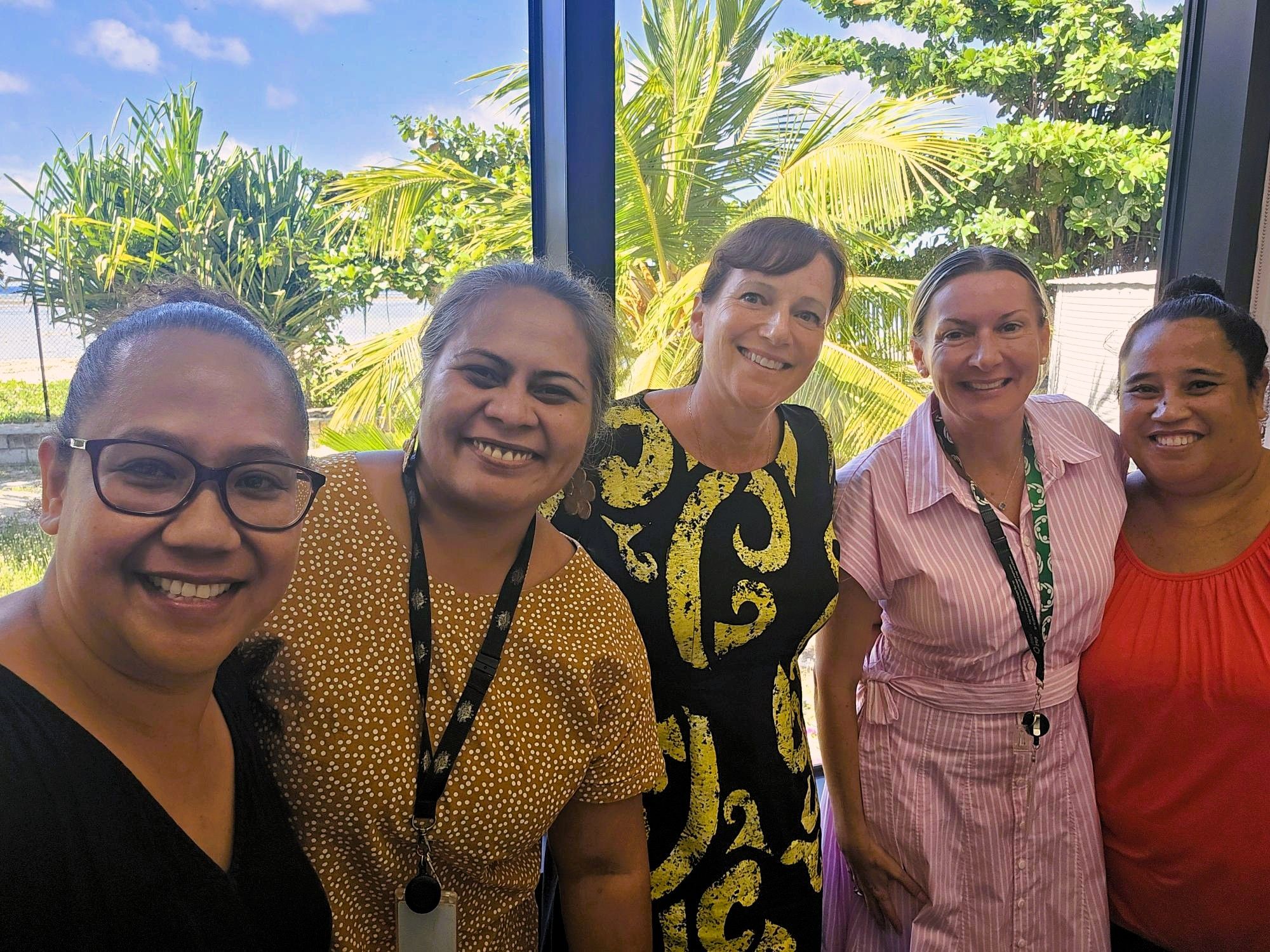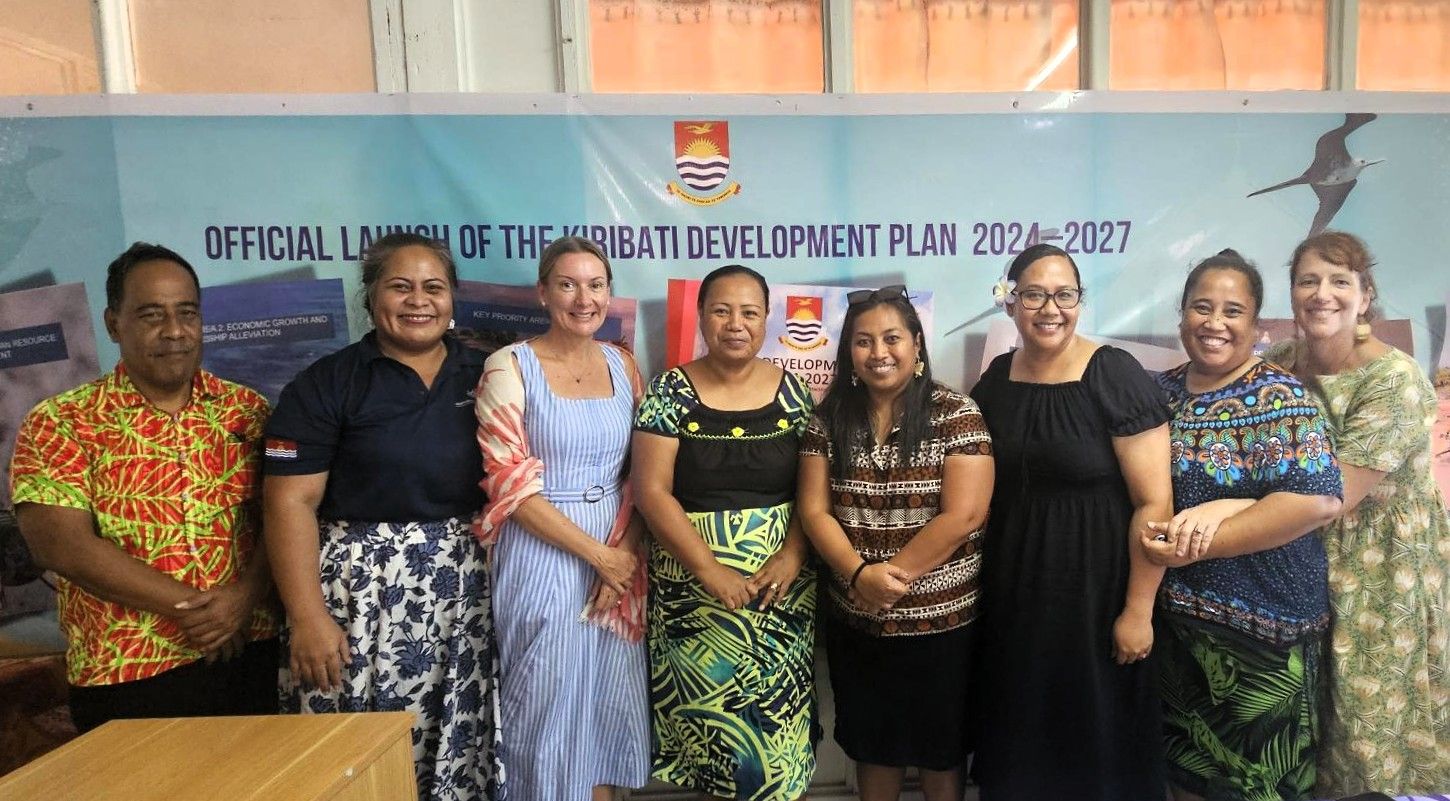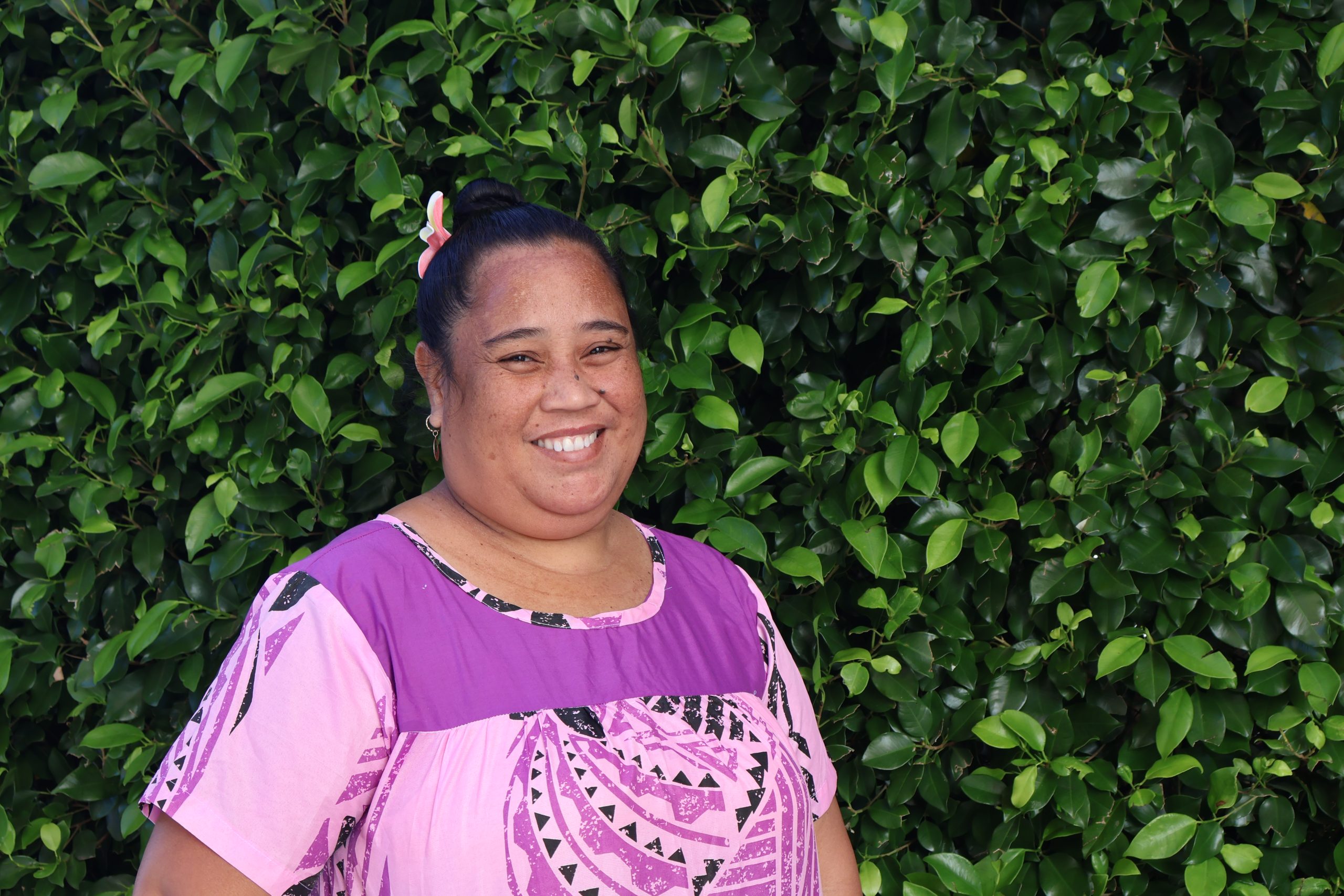
At the Australia-Pacific Partnerships Platform (Partnerships Platform), our people are at the heart of everything we do: creating impact, building connections and bringing partnerships to life across the Pacific.
Meet Motiretaake Biita – Partnerships Officer, Kiribati.
Motire sat down with us to share her Partnerships Platform journey, what she loves the most about her role and her thoughts on gender equality. As the Partnerships Officer, Motire is more than just a coordinator. She is a trusted guide, problem solver and the go-to person when it matters most.
How long have you been with the Partnerships Platform?
This is my fifth year with the Partnerships Platform as the Partnerships Officer in Kiribati.
Tell us a bit about this role – what are some exciting things you get to do? What is “a day in your life as a Partnerships Officer”?
A big part of my role is to directly support personnel as they plan to live and work in Kiribati – organising visas, orientations, health and safety, assisting with accommodations for our technical advisers.
The moment they arrive at the airport, I meet them. We begin with an orientation from South Tarawa all the way to their accommodation on the other side, pointing out all places and facilities that they would access when in Kiribati: shopping centres, roadside markets, hospitals, law enforcement and other public services. I make sure that they have necessary items like sim cards for communication, and they know how to get in touch with me.
The highlight of being the Partnerships Officer really is the opportunity for relationship building with communities, businesses and people in government. Having formerly worked with Australian-funded programs such as Pacific Technical Assistance Mechanism (PACTAM), I have built close working relationships with government department secretaries and organisations. I get to connect our team so they can work directly with these stakeholders, ensuring that everyone is well informed about activities and personnel movement, and meetings and events go smoothly.
What are you looking forward to doing this year/ in the coming months?
I am looking forward to working with ‘Ana and the Partnerships Platform on KiriPROSPER.
KiriPROSPER is the Kiribati Australia Program Supporting People and Economic Reforms, which will be socialised in the coming months. This investment will support inclusive economic reforms and improved service delivery, helping to strengthen resilience and prosperity outcomes for the people of Kiribati.
This year’s International Women’s Day (IWD) theme was “Balance the Scales”. What does this mean to you?
Thinking about it, balancing the scales is something we have done in our program and Partnerships Platform activities. We work very closely with partners to make sure we are considerate. I can also openly and confidently talk to my colleagues like ‘Ana and everyone across the team and contribute equally. That’s why I like the Partnerships Platform.
The path to achieving gender equality is better now. In Pacific cultures, there is usually a hierarchy, with women only listening. Unlike before, you can now see women making rules. With the work of the Ministry of Women, Youth, Sport and Social Affairs (MWYSSA) and the launch of the local centre for women and children, women are more knowledgeable about their rights, what they are doing and how they can contribute to their workplace. Women who are in top professional roles and also have to manage at home, know they can decide everything in the family at home, workplace, villages, the Maneaba, and that’s a big change. Many of the Secretaries, who are like CEOs within the Ministries, as well as those in leadership and public management roles are women now which is amazing.
There’s been a cultural shift, and I think it is because of education and national laws like the Te Rau N Te Mwenga (Family Peace) Act and National Approach to Eliminate Sexual and Gender-Based Violence Policy and Action Plan. That’s where the change is coming from.
How do you think we can achieve gender equality?
We are already doing that. We have that in our families, giving trust, understanding and listening to each other, not only as a parent, but listening to our kids as well and making decisions from there.
Before, women did not have the chance to make decisions and inputs and used to be afraid and stayed quiet even if they had good ideas or something to share.
What advice would you give to iKiribati and Pasifika women and girls?
My advice to women and girls is: To let our light shine, and don’t let the past dim our light. I would like to encourage our fellow Pacific women, that they can do what they put their minds to, and to talk, be unafraid and express themselves as best as they can.
——
Motire was also joined by Country Manager – Kiribati, ‘Ana Talanoa Baker who strongly acknowledges Motire’s valuable contributions towards the success of the Partnerships Platform’s activities in Kiribati to date, and her critical role as we make progress towards KiriPROSPER.
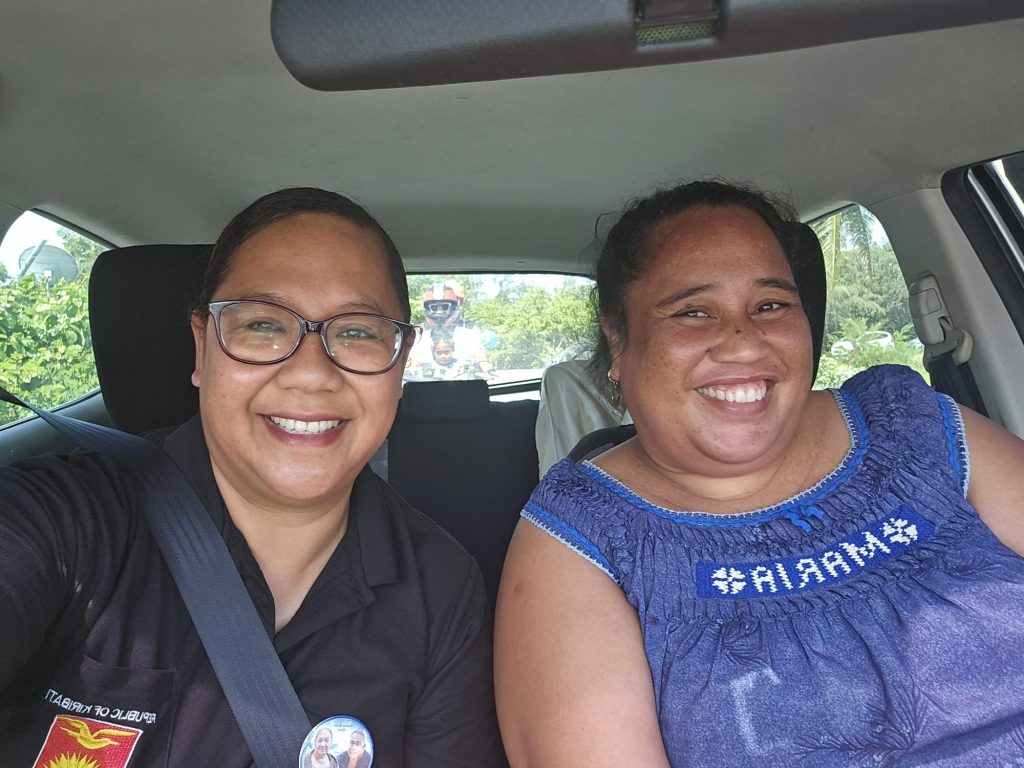
Motire is our face in Kiribati. She makes that first connection with personnel face-to-face and ensures that they are well-supported during their stay in Kiribati.
Motire brings to our program rich cultural advice and experience, guiding Partnerships Platform personnel through protocols and integrating with communities in Kiribati. Working with people is one of her great strengths. Motire’s network is huge and having her coordinating our activities in Kiribati, gives us so much opportunity to work with our partners and gain valuable insights.
When you’re in Kiribati, you’re in Motire’s hands. She is the first point of contact for any incidents, and will advise on food, accommodation, mobilisation and other logistics. She facilitates communication among locals and English-speakers ensuring that everyone we work with are aware of our work, and we are aligned with our partners’ vision. Our personnel and Support Unity rely heavily on Motire.
Motire will play a pivotal role with the upcoming KiriPROSPER initiative. Motire will be actively supporting the implementation of KiriPROSPER, especially with the design of activities, monitoring, evaluation, research and learning (MERL), gender equality, disability and social inclusion (GEDSI). Her expertise and local knowledge will be very valuable in upcoming workshops and discussions for the program.